
Areas of impact
Chip integration is considered worldwide to be the greatest challenge in the development of the next generation of semiconductor devices. A generation that paves the way for even smarter and more energy-efficient products.
Chip integration goes far beyond traditional packaging (‘making a box around the chip’). It can truly be seen as an integral part of the device’s functionality.
CITC works on technology that helps to provide answers to societal challenges. We focus on the following application domains: energy, mobility, communication, aerospace and defense.
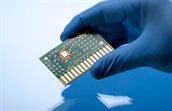

Energy
The relation of integration technology and energy is twofold:
- Advanced die/clip attach technology enables chips to be used for more sustainable (Pb-free) high power applications – e.g. in electric vehicles, solar and wind farms. The main challenges here lie in improving heat dissipation in power devices.
- By integrating smart chips into a single package, energy consumption can be significantly reduced – e.g. by using photonic chips.
Mobility
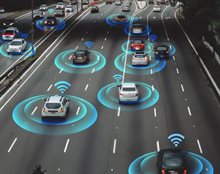
The development of electricity-driven cars and buses can only continue if ‘high-power’ chips are used and further developed. Such wide band gap (WBG) chips are capable of handling large energy-flows without high losses at low and high frequencies.
Self-driving cars can’t communicate fast and safely without a broad 5G/6G network. New, highly integrated and efficient chips are needed for the development of mmWave based networks.

Communication
The future of communication is in ultra-fast connectivity. Technologies such as mmWave and antenna in package play a key role in wifi, 5G/6G and IoT. Relevant topics here are:
- Data transmission by sensors using microchip technology
- High bandwidth wireless communication
Aerospace
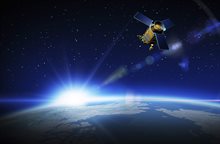
Semiconductors are playing an increasingly central role to the future of aerospace. They go far beyond traditional control electronics and enable autonomy, efficiency, connectivity, and new mission capabilities. Advanced chip integration will evolve in:
- Autonomous flight and operations
- Electrified, low-emission aircraft
- Miniaturized and powerful satellites
- Global real-time communication
- Intelligent, data-driven aerospace systems

Defense
Semiconductors are becoming mission-critical in modern and future defense systems. They are shifting from simple electronics to core enablers for sensing, decision-making, communication, and weapon effectiveness:
- The future battlefield will not just be about tank or aircraft, but about who possesses the most advanced, reliable, and secure chips powering their systems.
- Photonic and quantum chips will reshape defense to ensure secure communication and enable ultra-fast data transfer and advanced sensing.